Mobile trading apps can provide access to stocks, exchange traded funds (ETFs), currencies, cryptocurrencies, options and futures. Some also offer contracts for difference (CFDs), where local rules permit them. The practical difference between these markets is not how their charts look on your phone. It is what you own, how your exposure is calculated and what obligations remain after you tap “buy.”
A stock purchase, a call option and a CFD can all reference the same company while carrying very different risks. One gives you shares; another has an expiration date; another creates a contract with a provider rather than ownership of the shares.
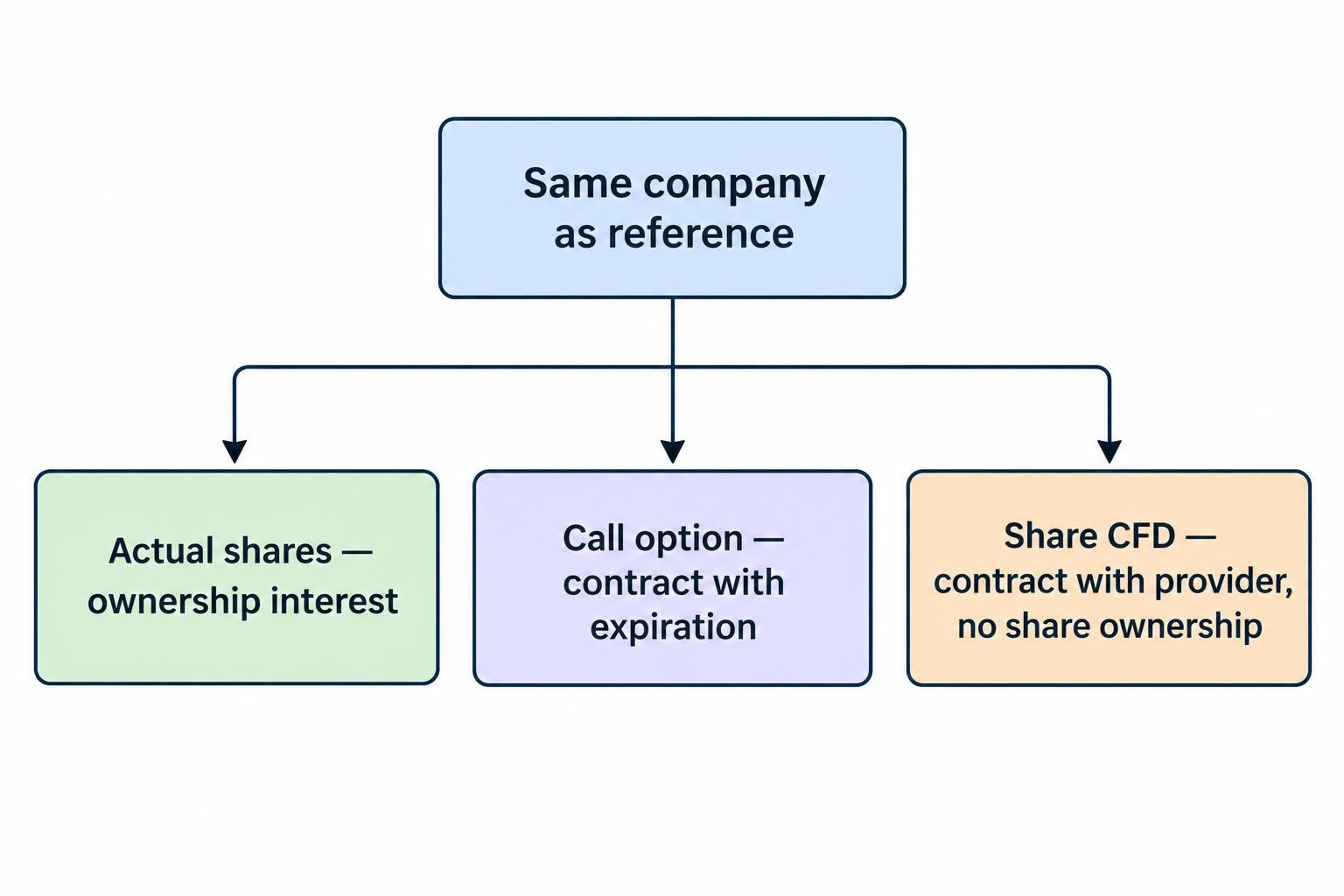
This guide compares the main mobile trading markets and the decisions that matter before choosing one. Treat the phone as the access point, not the investment strategy. A smaller screen does not make a complicated product simpler.
Mobile Trading Markets Compared
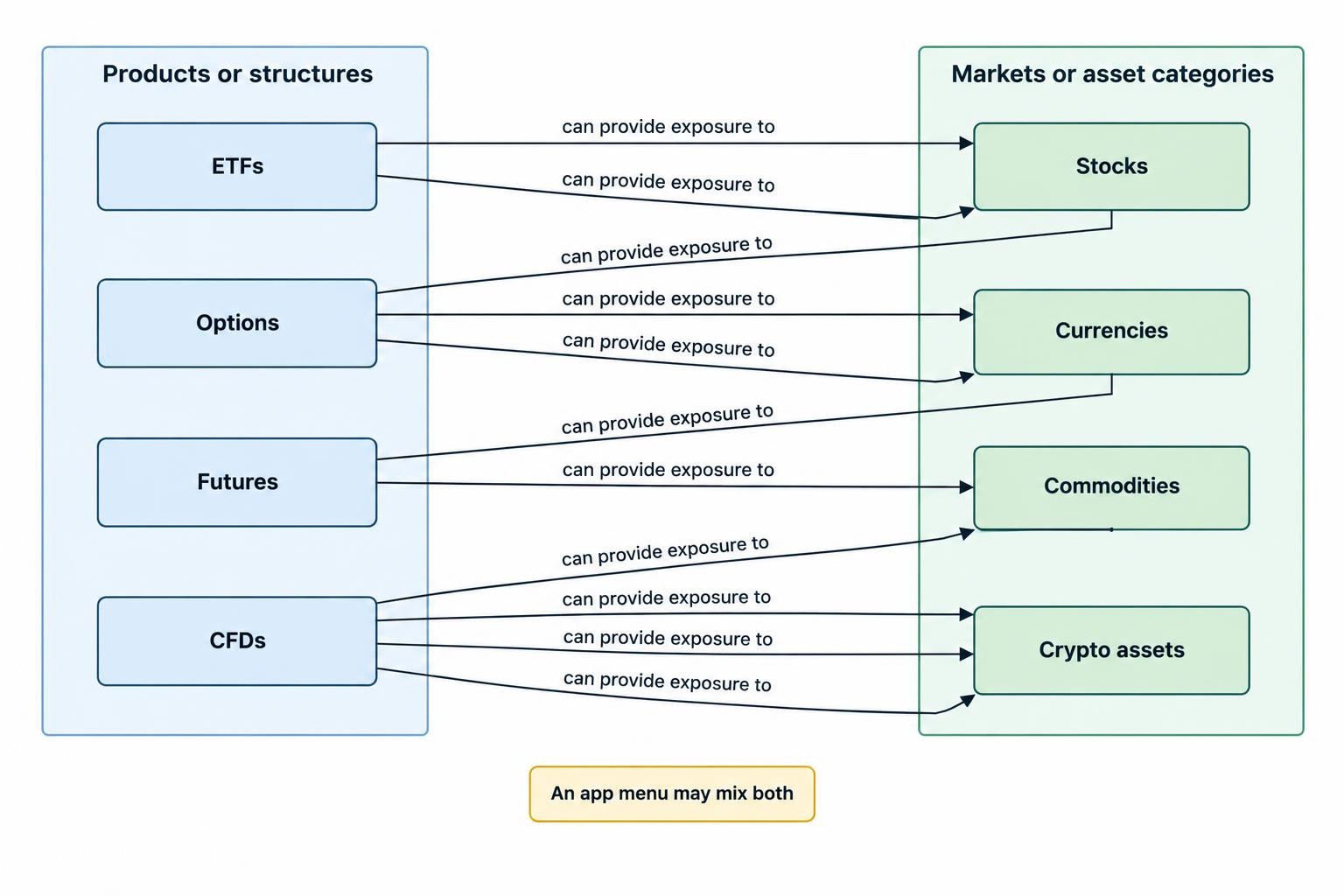
Start by separating the underlying market from the product used to trade it. Stocks, currencies and commodities are markets or asset categories. ETFs, options, futures and CFDs are structures that can provide exposure to those categories. An app’s product menu may mix both.
| Market or product | What the position represents | Main risk to assess | Mobile decision point |
|---|---|---|---|
| Stocks | Ownership interest in a company when buying actual shares | Company losses and falling share prices | Can you review company news before trading? |
| ETFs | Shares in a fund with a stated investment objective | Losses in its holdings or strategy | Can you check what the fund holds? |
| Forex | Exposure to one currency relative to another | Exchange rate changes and margin exposure | Do active trading periods fit your schedule? |
| Cryptocurrency | Crypto assets or a product referencing their prices | Price volatility, custody and platform risk | Can you distinguish spot purchases from derivatives? |
| Options | Contractual rights or obligations linked to an underlying asset | Premium loss, expiration and seller obligations | Can you inspect every contract detail? |
| Futures | Standardized contracts with settlement terms | Leveraged losses and margin demands | Can you monitor exposure and contract deadlines? |
| CFDs | A contract settling changes in an underlying price | Leveraged losses and provider exposure | Is the product lawfully available to you? |
Stocks: Direct Exposure to Individual Companies
Buying actual shares gives you an ownership interest in a company. Your investment then depends on the business, the price paid and what other investors will pay when you sell. Without borrowing or a separate derivative position, a falling price does not create the same margin demands as a leveraged trade.
Stocks suit research built around identifiable businesses: revenue, debt, earnings and valuation. Mobile access makes it convenient to maintain a watchlist or manage an existing position, but a headline notification is not a substitute for reading the announcement behind it.
Consider a trader following a retailer’s earnings release. The share price falls, apparently offering a cheaper entry. Before buying, the trader needs to establish whether the market is reacting to temporary costs, weaker sales or a change in the company’s outlook. The chart alone cannot answer that.
Check that the order ticket refers to actual shares rather than a derivative referencing the company. The mobile stock trading guide covers the stock workflow, including research and execution considerations, in more detail.
ETFs: Exposure Through a Fund
An ETF lets you buy shares in a fund rather than select every underlying investment yourself. Funds can follow broad indexes, concentrate on an industry or use an actively managed strategy. The fund’s objective matters more than the familiarity of its ticker.
Do not assume every ETF offers broad diversification. A narrow sector fund can leave you exposed to the same economic pressures across many holdings. Leveraged and inverse ETFs also require separate attention: many target daily results, so returns over longer periods can differ sharply from the advertised daily multiple. The SEC bulletin on leveraged and inverse ETFs addresses this distinction.
For a mobile workflow, make the fund objective, holdings, expenses and trading spread part of the review before ordering. Two funds with similar names need not behave alike.
The mobile ETF investing guide covers fund selection and the practical checks involved in buying fund shares through an app.
Forex: Trading Relative Currency Values
Forex trading expresses a view on one currency against another. Buying EUR/USD, for example, creates exposure to the euro strengthening relative to the US dollar. Being optimistic about one economy is not enough; the other currency in the pair also matters.
Interest rate expectations, economic releases and political developments can affect currency prices. That makes timing part of market selection. If your only opportunity to trade falls during a period you have not studied, easy mobile access will not repair the mismatch.
The product structure deserves equal attention. Currency conversion, retail forex contracts, currency futures and currency ETFs are not interchangeable. Check the agreement, margin terms and trading costs rather than relying on a “forex” label in the app.
Suppose your analysis depends on an economic announcement arriving during your commute. Ask whether you can review the release and manage the resulting exposure without distraction. If not, change the trading plan rather than trying to outpace the market between train stops. Our mobile forex trading overview covers the currency trading workflow.
Cryptocurrency: Separate Trading from Custody
Cryptocurrency access can mean buying a crypto asset, purchasing a fund share or entering a derivative contract. These routes may reference the same price without giving you the same ownership, withdrawal rights or obligations.
For direct purchases, custody is a separate decision. With self custody, you manage access through your private keys. With third party custody, a provider controls that access, creating exposure to its security and continued operation. The SEC bulletin on crypto asset custody sets out these differences and the questions to ask a custodian.
Keep two questions separate: “Can I trade this asset?” and “Can I withdraw it to a wallet I control?” A displayed balance does not answer both.
Before using real money, establish which product you are buying and how you would exit or transfer it. The mobile cryptocurrency trading guide examines these choices without treating an exchange account and a wallet as the same thing.
Options: Contract Details Come Before Direction
Options introduce more decisions than buying or selling the underlying asset. You must identify the call or put, strike price, expiration date, quantity and whether you are opening or closing a position.
A purchased option can expire worthless, costing the buyer the premium paid. Selling options creates different obligations, and an uncovered call can expose its seller to theoretically unlimited losses. The Options Industry Council’s options basics explains the distinction between holders’ rights and writers’ obligations.
On mobile, treat the order review screen as part of the analysis. Similar contract names and adjacent expiration dates deserve more than a quick tap. A correct directional view does not rescue an order entered for the wrong contract.
Use the mobile options trading guide for the contract selection and order review process. If you cannot explain the position’s possible outcomes away from the app, pause before submitting it.
Futures: Contract Exposure Matters More Than the Deposit
Futures provide exposure through standardized contracts. Depending on the contract, the underlying market may involve an equity index, commodity, currency or another financial measure. Contract size, price increments and settlement terms determine what a position actually means.
The margin deposit is not the purchase price of the underlying exposure, nor is it a reliable measure of maximum loss. Leveraged derivatives losses can exceed the initial margin deposit, leaving the account holder responsible for additional funds. The CFTC guidance on contractual obligations highlights this risk.
As a hypothetical example, a contract with a $5 value per point loses $250 on an adverse 50 point move, before costs. That arithmetic remains the same regardless of how small the initial deposit looks on the order ticket.
Before trading, identify the exact contract month, point value and applicable deadlines. The mobile futures trading guide covers the contract checks and monitoring requirements that deserve attention on a phone.
CFDs: Price Exposure Without Owning the Asset
A CFD creates an agreement to settle the difference between an opening and closing value. You do not acquire the underlying shares, commodity or index simply because its name appears above the chart.
This makes product identification especially important. Buying a share CFD is not the same transaction as buying that company’s shares. Compare the full exposure, margin requirements, financing terms and provider agreement before considering whether the trade fits your plan.
Availability also depends on jurisdiction. US retail persons cannot enter into CFD swaps covered by the Commodity Exchange Act unless they are offered on a designated contract market, a restriction addressed in the CFTC’s published interpretation of retail swap restrictions. Access to an offshore app does not establish lawful access to its products.
The mobile CFD trading guide examines this product separately. Do not treat CFDs as a workaround for an unavailable stock or futures account.
Indices and Commodities: Choose the Exposure Route
An index level is a calculation, not something you can place directly into an account. Exposure comes through a product such as a fund, option or futures contract. “Trading the index” therefore leaves an unanswered question: through what instrument?
The same distinction matters for commodities. Shares in a gold mining company, a gold related fund and a gold futures contract do not represent identical positions. A mining company also carries business risks; a fund follows its stated strategy; a futures contract has its own contract terms.
Choose the economic exposure you want before choosing the order ticket. Otherwise, you can be right about the underlying theme and still hold a product that behaves differently from what you expected.
How to Choose a Market for Your Mobile Routine
Match the market to your available attention
Start with your holding period and the time you can realistically spend reviewing positions. A trade requiring immediate responses is a poor match for a day filled with meetings. A position that can be assessed at planned intervals may fit that routine better, provided its risks and structure support the approach.
Write down when you will review the position, what would invalidate the trade and what you will do if you cannot access the app. These are selection criteria, not administrative chores after the purchase.
Compare exposure, not minimum order amounts
A low minimum order can help control commitment, but it does not automatically make the product appropriate. Separate the cash required to open the trade from the exposure created and the loss you could face.
For each candidate market, calculate the effect of an ordinary adverse move in dollars. Then consider a larger move and a delayed exit. If the result is uncomfortable, reduce the position or reconsider the product. Do not let the app’s suggested quantity make that decision for you.
Check what the mobile interface lets you verify
Before funding an account, assess whether its mobile interface lets you inspect the instrument name, contract terms, trading status, costs and existing exposure without guessing. Product availability is not enough if the information needed to manage it is hard to find.
Keep the initial scope narrow. Learning one market’s price behavior, terminology and order process is more useful than opening positions across five unfamiliar products. More tabs do not equal more diversification.
Make the Product Clear Before Placing the Trade
Before choosing a mobile trading market, answer four questions: What am I buying? What can I lose? When might I need to act? Can I manage that obligation from my phone?
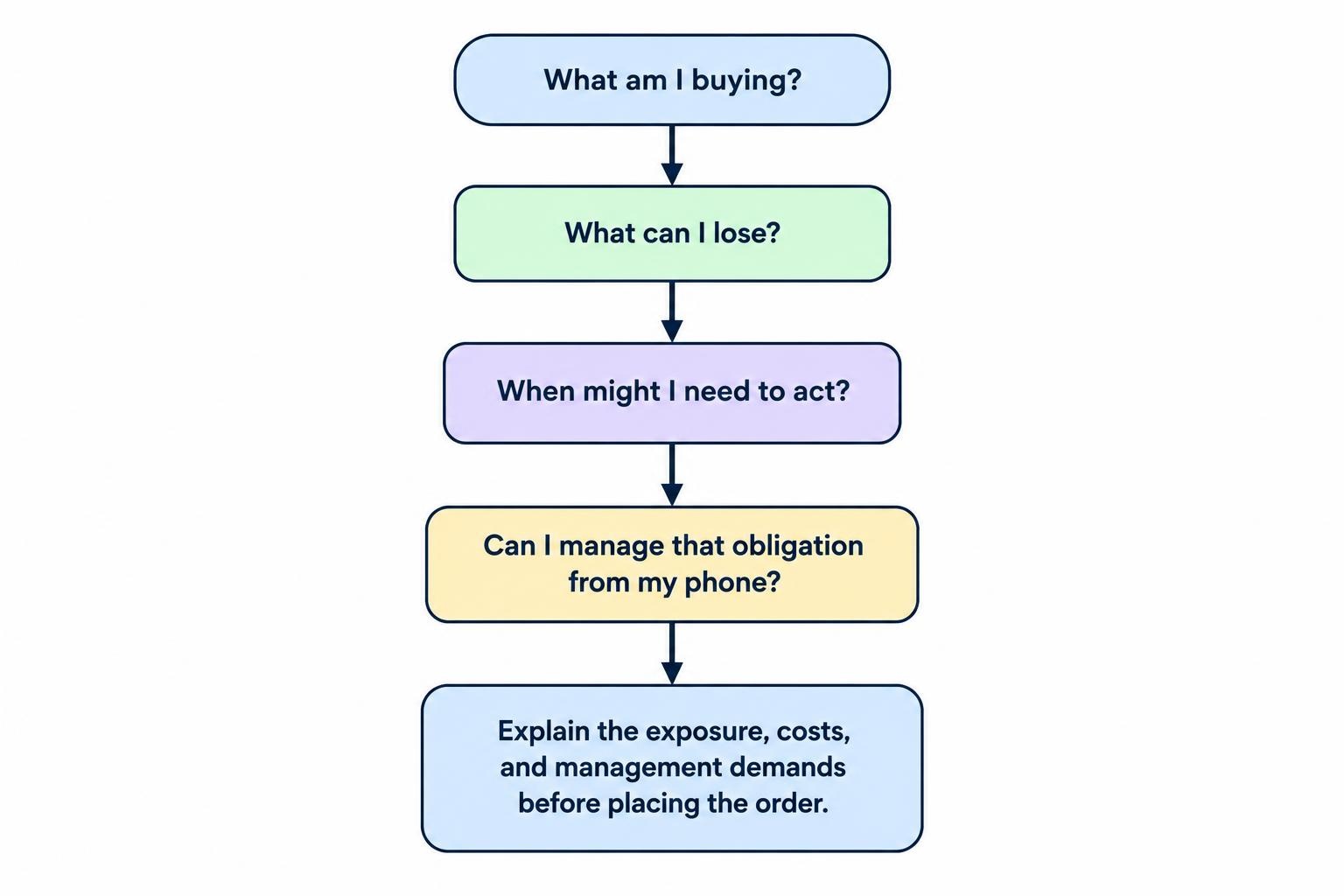
Use those answers to narrow the choice, then review the relevant market guide. The right starting point is not the product with the most alerts or the smallest opening deposit. It is one whose exposure, costs and management demands you can explain before placing the order.